Technology and electronics circuit board with illuminated processor pins — high-value freight
Technology Freight · Chain-of-Custody / ESD-Safe

Technology Freight.
High-Value Handling.
Tracked Door to Door.

A dropped server rack or an ESD event on a $2M semiconductor shipment is not a carrier claim — it’s a program delay measured in quarters. Qeep handles technology freight like the load it actually is.

24/7
Dispatch
<1 hr
Quote response
1
Contact from quote to POD
10,000+
Shipments a year, all industries
Why Technology Freight Is Different

Secure, ESD-Safe Logistics for Semiconductors, Data Centers & High-Value Electronics

Air-rideTrailers for racks and sensitive hardware
100 VStatic discharge that can damage some chips
1Contact from quote to POD
10,000+Shipments a year, all industries
Technology freight is deceptive: the boxes are light, but the stakes are extreme. A single pallet of server CPUs can exceed $1 million in declared value. Data-center hardware is sensitive to static discharge, vibration, and temperature swings. Export-controlled components require EAR and TAA compliance screening before they cross an international border. For semiconductor manufacturers, data-center operators, OEM electronics brands, and IT contractors, Qeep Logistics books carriers and partners matched to high-value freight — background-checked drivers, ESD-safe handling, GPS-tracked air-ride trailers, cargo insurance arranged on request and sized to the declared value, and white-glove installation coordination at the receiver’s site.
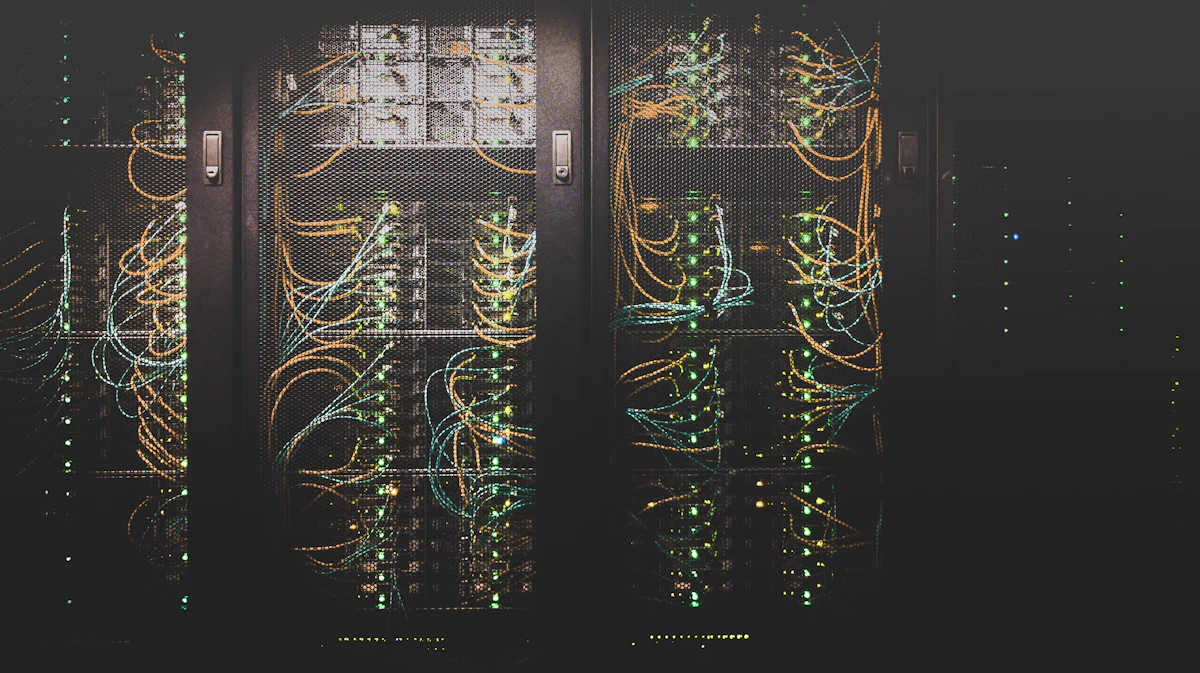
Data center server racks with dense cabling — high-value technology freight
Enterprise server racks — temperature-controlled, vibration-isolated transit
Chain-of-Custody Security

Four layers every high-value
electronics load rides behind.

Standard carrier liability is limited per pound and covers a tiny fraction of a truckload of GPUs. Qeep plans these four layers into high-value technology shipments, matched to the declared value.

GPS Door-Seal Tracking

Tamper-evident electronic door seals, booked on request, log every open/close event with GPS coordinates and timestamps. Any mid-transit access triggers an alert to your security team and our 24/7 dispatch.

Team-Driver Assignment

For the highest-value loads we book background-checked team drivers. No solo drivers. No unsecured overnight stops. Continuous movement from origin to delivery.

Declared-Value Cargo Insurance

Cargo insurance arranged on request, sized to the declared value of the shipment. Ask for cover that includes theft, physical damage, and damage documented during handling.

ESD / ANSI-ESD S20.20 Handling

Partner facilities running ANSI/ESD S20.20 programs when freight needs handling. Anti-static flooring, grounded workstations, ionizing blowers, and wrist straps at pack and unpack stations. ESD packaging inspected on inbound receipt.

White-Glove Installation

We don't stop at the dock.
We coordinate the install.

We pre-coordinate with your IT facilities team — delivery window, building access, elevator reservations, dock assignments, and in-row placement. The delivery teams we book use server-rack dollies and anti-static mats. A signed chain-of-custody receipt from the IT site lead closes every job.

The Hard Part

Five challenges that break
generalist freight brokers.

Extreme Per-Unit Value Creating Theft & Damage Exposure

Consumer electronics and semiconductors rank among the most frequently targeted commodities in cargo theft. A single 53-foot van of graphics processing units (GPUs) or CPUs can carry $3–5 million in market value. Standard carrier liability is limited per pound and covers only a tiny fraction of that exposure. Background-checked drivers, GPS trailer monitoring, and declared-value insurance are non-negotiable.

Electrostatic Discharge (ESD) Risk During Handling

CMOS semiconductors, SSDs, and certain PCBs can be permanently damaged by as little as 100 volts of static discharge — invisible to the handler and undetectable until the device fails in the field. Generic warehouse and drayage environments are not equipped with ESD flooring, anti-static workstations, or ionizing blowers. Improperly handled components may pass initial QC but fail early in the field, triggering costly warranty returns and reputational damage.

White-Glove Installation Coordination

Data center hardware deployments require more than drop-off at a loading dock. Server racks must be placed in precise locations, cabled, and often powered-on and racked by the delivering team under IT staff supervision. Scheduling delivery teams with IT windows, coordinating elevator access in high-security facilities, and ensuring no ESD or physical damage during the in-building move require a logistics partner who coordinates the installation side, not just the delivery.

Export Administration Regulations & TAA Compliance

Technology products subject to the Export Administration Regulations (EAR) require Export Control Classification Number (ECCN) screening before export. Federal IT procurement must also comply with the Trade Agreements Act (TAA), which restricts country-of-origin to WTO-GPA qualifying nations. Misclassifying a load or shipping to a restricted end-user without a license exposes the shipper to criminal penalties and debarment from federal contracts.

Time-Critical Supply Chain Dependencies

A delayed shipment of networking switches can hold up a $50M data center commissioning. Late delivery of semiconductors to a contract manufacturer can shut down an entire production line. Technology supply chains operate on hours, not days. Standard LTL transit times of 4–7 days are unacceptable for most critical-path moves in this vertical.

How We Operate

Five capabilities. One contact.

  1. 01

    1. Vetted, High-Value Carrier Assignment

    Every high-value technology load is tendered to pre-vetted carriers with background-checked drivers and GPS-tracked trailers, with electronic door seals on request. For the highest-value loads we book team drivers so the freight keeps moving and does not stop in unsecured lots overnight. Live GPS tracking can be shared with the shipper’s security team.

  2. 02

    2. ESD-Safe Handling & Facility Standards

    When freight needs handling between pickup and delivery, we use partner warehouses and cross-docks with ESD flooring, anti-static workstations, ionizing blowers, and grounding wrist straps at pack and unpack stations, running ANSI/ESD S20.20 programs where the load calls for it. ESD-safe packaging is checked on inbound receipt and replaced if compromised before any re-handling.

  3. 03

    3. Declared-Value Cargo Insurance on Request

    Standard carrier liability rarely covers electronics or semiconductors. We arrange cargo insurance on request, sized to the declared value of the shipment. Ask for cover that includes theft (including organized cargo theft), physical damage, and damage documented during handling, and the certificate goes out with the load documents.

  4. 04

    4. White-Glove Delivery & Installation Coordination

    We pre-coordinate with the receiver’s IT facilities team: delivery window, building access, elevator reservations, loading-dock assignments, and in-room placement requirements. The delivery teams we book use equipment sliders, server-rack dollies, and anti-static mats for final placement. Post-delivery chain-of-custody documentation is signed by the IT site lead.

  5. 05

    5. Export Control & TAA Compliance Screening

    For cross-border and international technology moves, we ask for the ECCN classification and any export licence up front, check end-users against the Denied Persons and Entity Lists, and confirm TAA country-of-origin paperwork for federal-bound shipments. Classification and licensing stay with the exporter. Customs entries are filed by our partner licensed brokers, coordinated by Qeep.

Fiber optic network patch panel with dense colorful connectors — data center infrastructure

Every connection in your network depends on every component arriving intact, charged, and on schedule.

Compliance & Regulations

The regulations technology
freight runs on — EAR, TAA, ESD S20.20, C-TPAT.

EAR — Export Administration Regulations

The EAR (15 CFR Parts 730–774) controls the export of dual-use technology, including semiconductors, encryption hardware, and advanced networking equipment. Shipments require ECCN classification, end-user screening, and in some cases an export license. Violations carry civil penalties per violation that are adjusted for inflation every year and criminal penalties up to $1M and 20 years imprisonment.

TAA — Trade Agreements Act

Federal IT procurement under GSA schedules and DoD contracts must use products manufactured in TAA-designated countries. Qeep verifies country-of-origin documentation for technology freight destined for federal agencies and flags non-compliant shipments before they reach a government receiving dock.

ANSI/ESD S20.20 — ESD Control Program Standard

The ANSI/ESD S20.20 standard defines the requirements for an electrostatic discharge control program in facilities handling ESD-sensitive components. When technology freight needs handling in transit, we use partner facilities that run an ESD control program to this standard.

C-TPAT — Customs-Trade Partnership Against Terrorism

High-value electronics crossing the Canada–US or Mexico–US border move faster when the carrier is certified under C-TPAT, which can qualify the load for expedited CBP clearance and reduce the risk of exam delays. Qeep matches high-value cross-border loads to C-TPAT certified carriers to cut the chance of a long exam hold.

FMCSA Cargo Securement (49 CFR 393.100–136)

Electronic equipment in racks and cabinets requires custom blocking and bracing to prevent damage from road vibration and driver maneuvers. We book carriers with air-ride trailers and specify custom cribbing and load-brace configurations for each data-center hardware move.

American conventional semi-truck hauling high-value technology freight on a US highway
Team drivers on request — GPS-tracked trailer
Server rack cabling in a secured data center environment
White-glove install at receiver — ESD-safe placement
Launch Logistics

Launch windows, street dates and allocation

Hardware launches put freight on a clock that nobody in the supply chain controls. A street date is announced publicly, retail and channel partners are contractually prevented from selling before it, and the product has to be physically present at hundreds of locations on the morning it opens. That inverts the usual objective. The goal is not the fastest possible delivery, it is a synchronised arrival across a whole network inside a window that has a firm opening as well as a firm close.

Getting there means working backwards from the date through every constraint in the chain. Manufacturing completion, port arrival or air freight cut-off, customs release, distribution centre processing time and the last-mile transit to each location each consume days, and the total has to fit between when product is available and when it must be on the shelf. Where the arithmetic does not work, the honest answer is to say so early enough that a mode can be upgraded or an allocation split, rather than to discover it in the final week.

Confidentiality is a real operational requirement on this work and not a marketing preference. Product that is embargoed should not be identifiable from the outside of a carton, a trailer or a shipping document that passes through many hands. Generic outer packaging, neutral descriptions on paperwork, and limiting how many parties know what is moving are ordinary practice on launch freight, and they matter because a leak before a street date has commercial consequences far larger than the freight cost.

Allocation makes the plan complicated in a way that pure transit planning does not capture. When supply is short, quantities are assigned by channel and by location, and those assignments change late as forecasts are revised. A freight plan for a launch therefore has to tolerate a change in quantity per destination without a change in the arrival date, which usually means holding product at a regional point and committing to final destinations as late as possible rather than shipping direct from origin on day one.

Finally, the contingency has to be specific rather than general. For a launch we identify in advance which shipments have no slack, what the upgrade path is for each one, who has authority to authorise the extra cost, and by what hour that decision has to be made for it to still help. A launch is the clearest case in freight where the value of a decision collapses to zero after a certain hour, and knowing that hour ahead of time is most of the preparation.

Asset Lifecycle

Hardware refresh and IT asset disposition

Every deployment of technology hardware eventually creates a reverse movement, and the reverse movement is usually planned worse than the forward one. Refresh cycles retire laptops, servers, network gear and point-of-sale hardware on a schedule that is known years in advance, yet the freight for it is frequently arranged in a hurry once the replacement equipment has already landed and the old units are stacked in a corridor. Planning both directions as a single project costs less and removes most of the friction.

The critical difference from ordinary reverse freight is that retired equipment is data-bearing. Drives, devices and even some network hardware retain information that has to be accounted for until it is destroyed or verifiably wiped, which makes the movement a custody problem rather than a transport one. Sealed containers, recorded serial numbers, signed handovers at every transfer and a receiving certificate from the disposition vendor are what turn a truckload of old equipment into an auditable process.

Packaging is the other practical constraint. Equipment coming out of service rarely has its original packaging, and shipping bare units in a trailer damages them enough to destroy the residual value that justified recovering them in the first place. Supplying proper containers, anti-static protection and pallet build to the sites doing the decommissioning, before the removal date, is a small logistics cost that directly protects the resale credit.

Sequencing matters here too, because sites cannot usually hold both the old and the new equipment at once. On a large refresh the removal has to follow the installation closely enough that the site is not storing two fleets, but not so closely that the removal crew arrives before the cutover is complete. That coordination is the whole job on a multi-site refresh, and it is why the same partner should handle the inbound and the outbound rather than two schedules run by two parties.

Finally, the reporting has to satisfy someone other than the logistics team. Finance wants asset numbers reconciled, security wants evidence that data-bearing devices were accounted for, and sustainability reporting increasingly wants documented diversion from landfill. All three are satisfied by the same record, provided it is collected while the equipment moves rather than reconstructed afterwards. We build the manifest at the point of pickup and close it against the disposition vendor receipt.

Common Questions

Questions technology shippers ask us.

How do you protect against cargo theft on high-value electronics shipments?
High-value loads go to vetted carriers with background-checked drivers and GPS-tracked trailers, with electronic door seals on request. For the highest-value freight we book team drivers so the load keeps moving and does not stop in unsecured locations. Live tracking can be shared with the shipper’s security team, and our 24/7 dispatch escalates immediately if a trailer goes dark.
What does ESD-safe handling actually mean in practice?
ESD-safe handling means your freight is touched only where there is anti-static flooring, grounded workstations, and personnel wearing ESD wrist straps. When freight needs handling in transit, we use partner facilities that run ANSI/ESD S20.20 control programs. ESD-safe packaging is inspected on inbound receipt and replaced if it shows signs of compromise — torn anti-static bags, broken conductive foam — before any re-handling occurs.
Can you coordinate white-glove delivery into a high-security data center?
Yes. We handle the full pre-delivery coordination: scheduling within the data center’s maintenance windows, building-access badging, elevator and loading-dock reservations, and in-row rack placement. The delivery teams we book use server-rack dollies and anti-static mats. We obtain a signed chain-of-custody receipt from the facility’s IT site lead before the team departs.
Do you handle export-controlled technology shipments?
Yes. For cross-border and international technology shipments we ask for the ECCN classification and any export licence up front, and check end-users against the Denied Persons, Entity, and Unverified Lists. For TAA-sensitive federal shipments, we verify country-of-origin documentation on every item. Classification and licensing stay with the exporter, and customs entries are filed by our partner licensed brokers, coordinated by Qeep.
What cargo insurance options are available for semiconductor loads?
Standard carrier liability is limited per pound and rarely covers semiconductors. We arrange cargo insurance on request, sized to the declared value of the load, with cover for theft, physical damage, and damage documented during handling. The certificate can be sent straight to the shipper’s risk management team.
How fast can you respond to a critical-path expedite for technology freight?
Dispatch runs 24/7, and quotes come back in under an hour, usually under 30 minutes in business hours. We book sprinter vans for sub-100-lb critical components, straight trucks for rack-and-stack loads, and team-driver expedites for full-trailer data-center hardware — dispatched as fast as carrier availability on the lane allows.
Let’s move it

Have a shipment? Get rates within the hour.

Tell us the origin, destination and mode. A Qeep specialist replies within the hour with live capacity, lane price, and a transit window you can actually plan around.